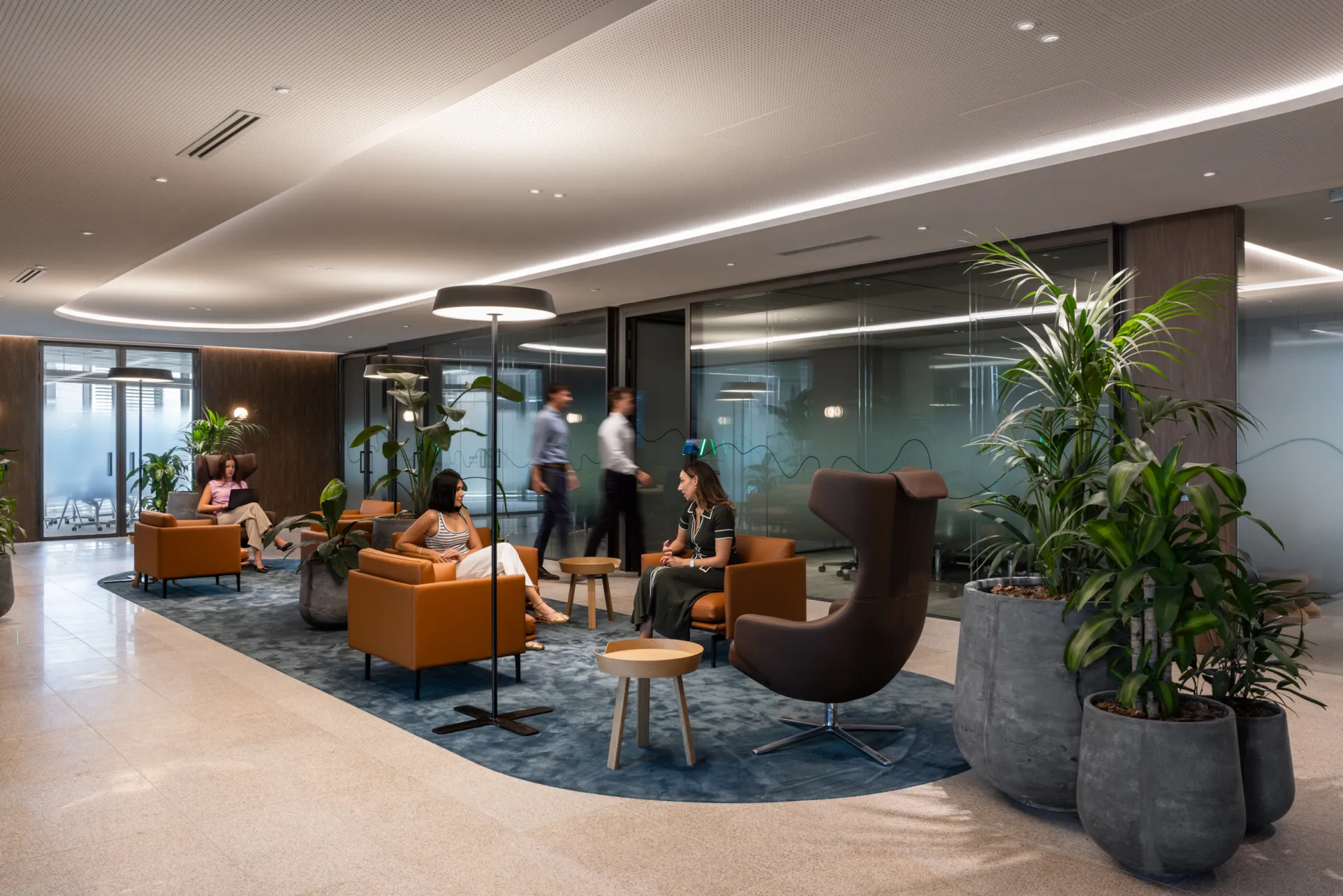
Office Acoustics and the WELL Building Standard: Reducing Noise for Better Workspaces
Acoustics can have a significant influence on how a workplace feels and functions. This insight looks at the relationship between noise, well-being and the WELL Building Standard, and how design choices can help create more comfortable working environments.
Acoustics and the WELL Building Standard
The WELL Building Standard focuses on how buildings can support the health and well-being of the people who use them. Developed from research across health, science and the built environment, WELL is administered by the International WELL Building Institute (IWBI).
Under WELL v2, Sound is a dedicated concept, addressing the acoustic conditions that can affect comfort and experience within a building. Its requirements and optimizations consider areas including sound mapping, maximum noise levels, sound barriers, reverberation and sound reduction between spaces.
For workplace designers, this means acoustics need to be considered as part of the overall spatial strategy rather than simply through the performance of individual products.
Designing for acoustic comfort
Workplaces contain different types of spaces with very different acoustic requirements. Open collaborative areas may accommodate higher activity levels, while private offices, meeting rooms and rooms intended for concentrated work may require greater separation from surrounding noise.
Good acoustic design therefore involves more than simply making spaces quieter. Background noise, sound absorption, room layout, building services and the sound insulation between adjoining rooms all contribute to the acoustic environment.
WELL reflects this broader approach. Its Sound requirements include consideration of loud and quiet zones and the relationship between spaces with different acoustic needs.
The role of glass walls
Glass walls are frequently used to create offices, meeting rooms and enclosed collaboration spaces while maintaining daylight and visual connection across the workplace.
Where acoustic separation is required, the glass wall system needs to be selected according to the required Sound Transmission Class (STC) and the performance of the complete assembly.
STC is a laboratory rating used to describe resistance to airborne sound transmission through a building element. The stated performance relates to the specific tested configuration, including the glass, framing, joints and seals.
Different PurOptima glass wall configurations can provide different levels of tested acoustic performance, allowing the system and glass build-up to be selected in response to the acoustic requirements of the space.
WELL and sound isolation
Sound isolation between enclosed spaces is specifically addressed within WELL.
The S03 Sound Barriers feature considers the sound isolation provided by interior walls and doors. WELL uses ratings including STC for design requirements and field measurements such as Noise Isolation Class (NIC) when assessing completed construction.
This distinction is important. A laboratory STC rating demonstrates the potential performance of the tested wall assembly, but the acoustic experience within the completed workplace also depends on how the surrounding construction performs.
Understanding performance on site
Once a glass wall is installed, other paths through the building can influence the apparent sound separation between rooms.
These flanking paths can include:
- Ceiling and floor plenums
- Building façades and mullions
- Junctions with adjacent walls, floors and ceilings
- Mechanical and electrical penetrations
- Doors and their perimeter seals
The performance experienced between completed rooms therefore cannot be determined from the STC rating of the glass wall alone.
Careful coordination of the wall, door and surrounding construction is important where acoustic separation is a project requirement.
Finding the right balance
Creating an acoustically comfortable workplace is not simply about achieving the highest possible STC rating.
The appropriate solution depends on the activity taking place within each space, the level of speech separation required, background sound and the relationship between enclosed and open areas.
By considering these factors together, designers can use glass walls to create enclosed spaces with clearly defined acoustic performance while maintaining the daylight and visual connection that glass can bring to a workplace.
For support selecting a PurOptima glass wall system and acoustic configuration for your project, speak to our technical team.
Recent insights
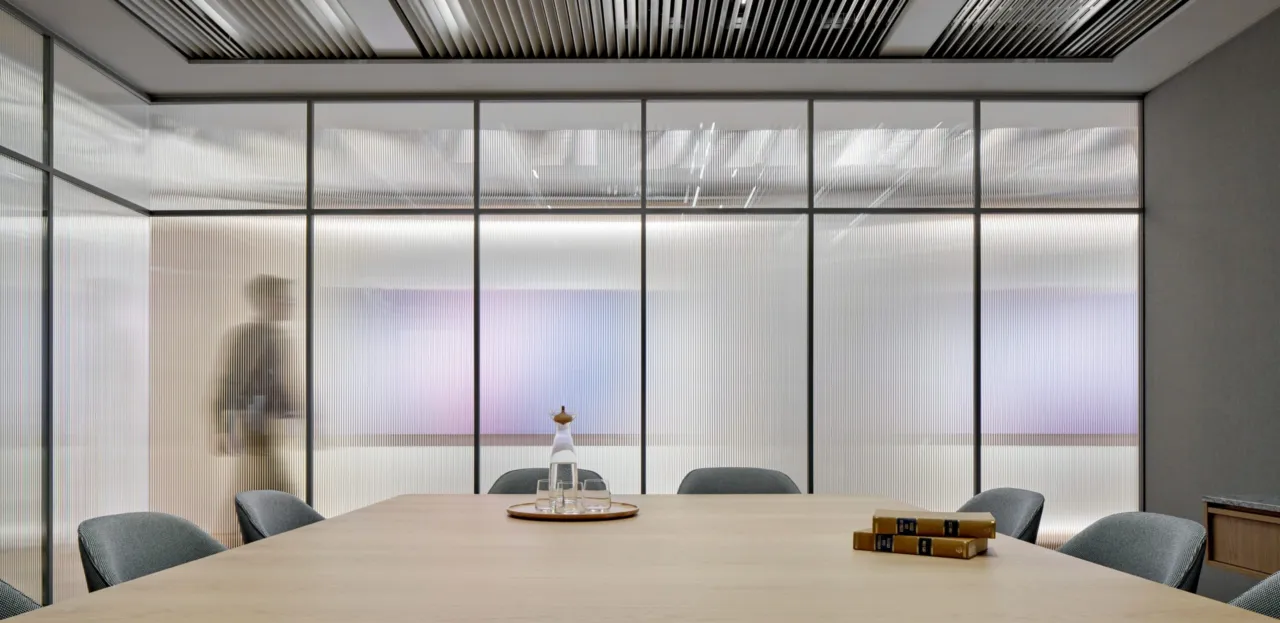 Sustainability
Optima contributes to industry debate and guidance on the reuse of glass partitioning
Optima is an active member of the Alliance for Sustainable Building Products (ASBP) and has contributed to the ASBP’s “The Reuse of Glass Partitioning Systems” guidance. We also took part in ASBP’s industry-wide webinar on the subject earlier this year.
View insight Trends
Is AI amplifying design thinking, or replacing it?
With AI impacting all aspects of work in the design community and construction industry, a question on everyone’s lips is what does this mean for me?
View insight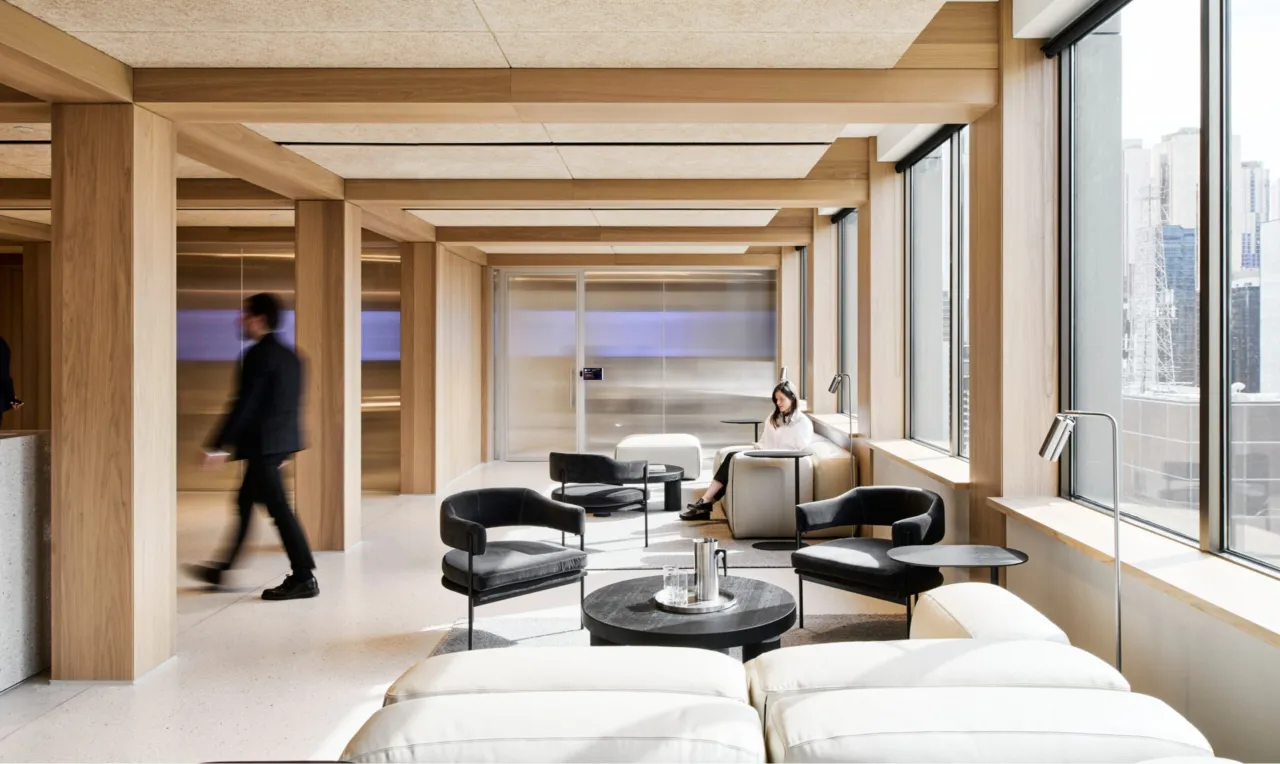 Blog
BlogBeyond Division 8 and 10: How Workplace Design Is Reshaping Collaboration
There is a noticeable shift happening in workplace design. The conversation has moved beyond desk ratios, occupancy density, and space efficiency toward something more human-centered. Increasingly, workplaces are being asked to justify presence rather than simply accommodate it.
View insight

Need help with your next project?
Talk to our team for practical advice on systems, performance and specification.
Enquire now
Sign up to the PurOptima newsletter
Stay up to date with the latest PurOptima innovations, project news and insights from across the global workplace design community