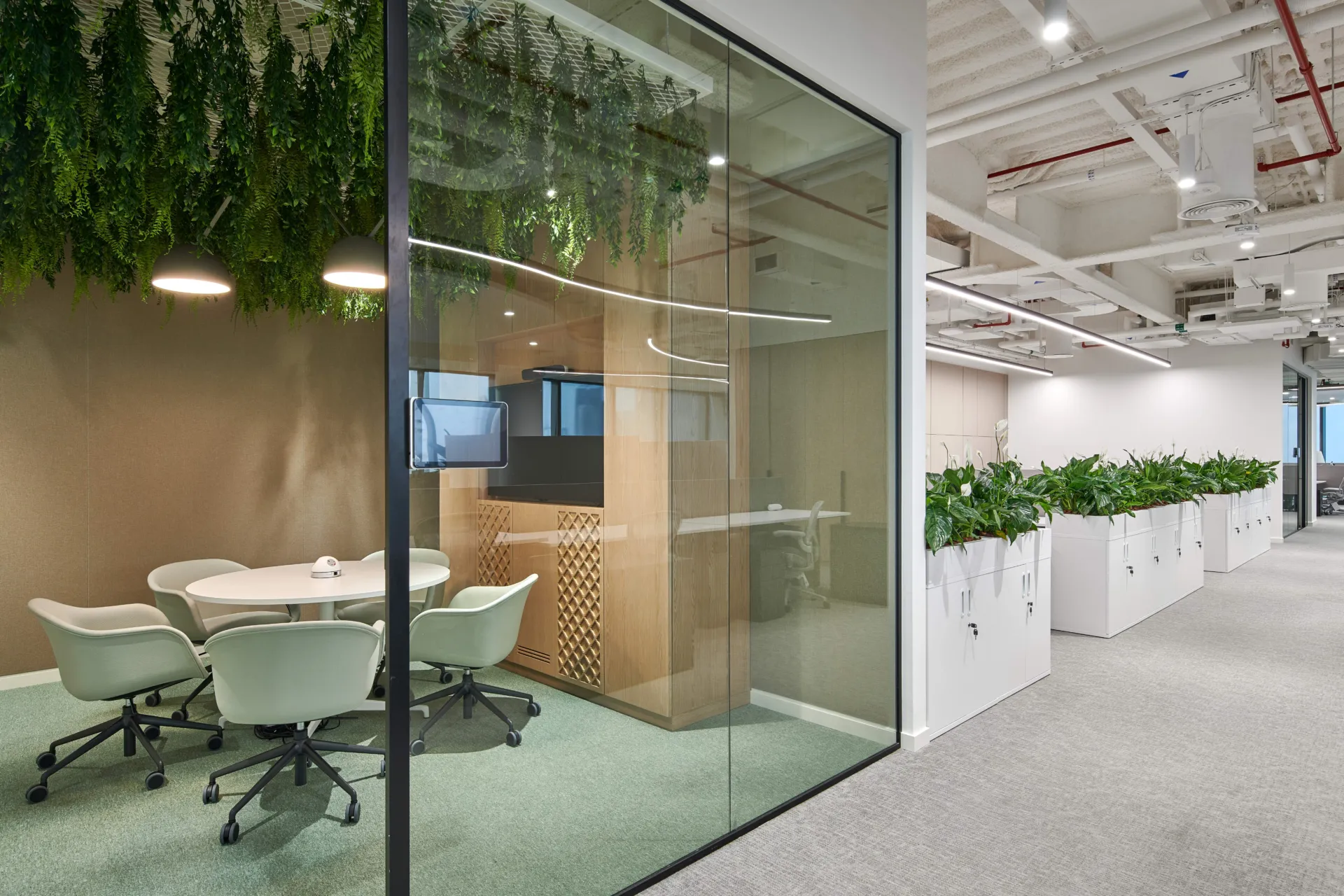
Laminated Glass vs Tempered Glass: Pros and Cons
Choosing between laminated and tempered glass affects safety, appearance and performance. Understanding how they differ helps you select the right glass type for your space and design requirements.
In this guide, we’ll dive into the pros and cons of laminated glass vs. tempered glass, explore what sets them apart, and highlight how PurOptima’s premium glass solutions might just be the perfect option for you. Let’s get started!
What is Laminated Glass?
Laminated glass combines two or more glass sheets with an interlayer of super strong adhesive. This interlayer holds the glass together when or if it shatters, creating a more resilient and safer option for glass partitions and doors. Commonly used in car windshields, windows, and office partitions, laminated glass offers unique advantages that extend beyond basic safety.
The manufacturing process involves heating the layers of glass and interlayer under pressure, ensuring the materials have a secure bond. This design not only enhances strength but also provides additional benefits, like sound reduction and UV protection, making laminated glass the perfect choice for both sun-exposed areas in the office.
The Pros and Cons of Laminated Glass
If you’re thinking about getting laminated glass, it’s essential to weigh all the facts. Here are the key pros and cons of laminated glass.
Pro: Safety
Laminated glass is incredibly popular for its safety features. Unlike standard glass, it holds together when broken, minimizing the risk of sharp, dangerous shards.
Pro: Acoustic Control
One of the standout pros of laminated glass is its ability to reduce noise. The multiple layers and interlayer act as a sound barrier, making it perfect for spaces interested in acoustic control.
Pro: UV Protection
Laminated glass offers excellent UV protection, blocking up to 99% of harmful UV rays. This feature not only protects your office interior from fading but also contributes to a more comfortable and energy-efficient space.
Pro: Security
The durable design of laminated glass adds an extra layer of security. It’s harder to break than normal glass, providing added protection against break-ins and extreme weather conditions.
Con: Cost
One of the drawbacks of laminated glass is its cost. Due to its multi-layered construction and advanced manufacturing process, laminated glass can be more expensive than normal types of glass.
Con: Weight
Laminated glass is heavier than tempered glass, which can make installation a little more complicated.
What is Tempered Glass?
Tempered glass is a single-pane glass that undergoes a heat-treatment process, making it much stronger than standard glass. It’s known for its ability to break into small, less harmful fragments. This feature makes it a popular choice for doors, office partitions, and other areas where safety glass is required.
The manufacturing process involves heating the glass to a super high temperature and then rapidly cooling it. This tempering process enhances the strength and durability of the glass’s surface.
The Pros and Cons of Tempered Glass
If you’re thinking about installing tempered glass in your office, it’s important to know the pros and cons of this glass type. Here are some advantages and disadvantages of tempered glass.
Pro: Safety
Tempered glass is specifically designed to shatter into small, rounded pieces, minimizing the risk of injury. This makes it an ideal choice for areas where safety is a primary concern.
Pro: Durability
Tempered glass is four to five times stronger than regular glass. Its resilience makes it ideal for high-traffic areas where the glass may experience impact or stress.
Pro: Heat Resistance
Tempered glass can withstand significant temperature fluctuations, making it ideal for environments exposed to heat.
Pro: Affordability
Tempered glass is generally more affordable than laminated glass, making it a cost-effective option for projects where budget is a concern.
Con: No UV Protection
Unlike laminated glass, tempered glass does not block UV rays, so your office interiors and employees won’t have that added protection from the sun.
Con: Vulnerabilities
While tempered glass is strong, its edges are vulnerable to chipping or breaking under pressure. Once a flaw occurs at the edge, the entire pane can shatter unexpectedly.
Con: Less Noise Reduction
Tempered glass does not provide significant sound insulation, making it less ideal for environments than laminated glass. That said, it does provide more acoustic control than standard glass.
Laminated Glass vs. Tempered Glass
Choosing between laminated vs tempered glass can be a different decision that greatly depends on your specific needs and priorities. The difference between laminated and tempered glass comes down to a few key categories:
- Strength and Safety: Laminated glass stays intact upon impact, enhancing safety, while tempered glass shatters into small, less harmful pieces. Both tempered vs laminated glass are extremely safe and strong.
- Acoustic Performance: Laminated glass offers superior sound insulation compared to tempered glass, making it the better choice for noise control.
- UV Protection and Energy Efficiency: Laminated glass blocks UV rays and helps with energy efficiency, whereas tempered glass does not.
- Cost and Installation: Tempered glass is generally more affordable and easier to install, while laminated glass requires more support due to its extra weight.
Recent insights
 Sustainability
Optima contributes to industry debate and guidance on the reuse of glass partitioning
Optima is an active member of the Alliance for Sustainable Building Products (ASBP) and has contributed to the ASBP’s “The Reuse of Glass Partitioning Systems” guidance. We also took part in ASBP’s industry-wide webinar on the subject earlier this year.
View insight Trends
Is AI amplifying design thinking, or replacing it?
With AI impacting all aspects of work in the design community and construction industry, a question on everyone’s lips is what does this mean for me?
View insight Blog
BlogBeyond Division 8 and 10: How Workplace Design Is Reshaping Collaboration
There is a noticeable shift happening in workplace design. The conversation has moved beyond desk ratios, occupancy density, and space efficiency toward something more human-centered. Increasingly, workplaces are being asked to justify presence rather than simply accommodate it.
View insight

Need help with your next project?
Talk to our team for practical advice on systems, performance and specification.
Enquire now
Sign up to the PurOptima newsletter
Stay up to date with the latest PurOptima innovations, project news and insights from across the global workplace design community