Designing the Right Office Atmosphere for Employee Wellbeing
Workplace wellbeing is shaped by more than layout alone. Air quality, acoustics, materials, light and comfort all influence how an office feels, functions and supports the people using it.
As organizations look to the future, there is a growing need to take a more integrated approach to workplace design. The environment we work in has a direct impact on employee well-being, influencing everything from concentration levels to overall job satisfaction. In this blog, we explore how air quality and material choices contribute to healthier, more effective office environments.
A holistic approach to WELL v2
Both material selection and air quality are central to the WELL Building Standard, which focuses on improving human health through better building design. WELL v2 encourages a more thoughtful approach to creating spaces that support occupants both physically and mentally.
One of the key considerations within WELL is the control of Volatile Organic Compounds (VOCs). These emissions, often released from construction materials and finishes, can negatively affect indoor air quality if not properly managed. As a result, designers are encouraged to specify materials with low or zero VOC emissions to create healthier internal environments.
External certifications can help verify compliance with WELL v2 requirements. Independent product attestations, such as those from Eurofins, confirm that aluminum glazed partitioning systems and other materials meet recognized standards including WELL, LEED, and BREEAM in relation to VOC emissions.
A breath of fresh air
With many people now returning to the office, even on a hybrid basis, indoor air quality has become a much more visible concern. While often overlooked in the past, it plays a significant role in how people experience a workspace.
Good air quality can improve focus, reduce fatigue, and contribute to a more comfortable working environment. Conversely, prolonged exposure to poor air can lead to headaches, respiratory issues, and reduced productivity.
To address this, designers are increasingly incorporating solutions such as advanced HVAC systems and air quality monitoring. These technologies help maintain consistent airflow and ensure that office environments remain safe, comfortable, and fit for purpose.
The role of materials in workplace wellbeing
Material selection is becoming just as important as overall design. The materials used within a workspace not only define its aesthetic but also influence how it performs over time and how it supports the people within it.
Today, it’s not enough for materials to be sustainable; they must also contribute to a healthier indoor environment. This means selecting finishes and systems that are durable, adaptable, and aligned with the needs of a modern workforce.
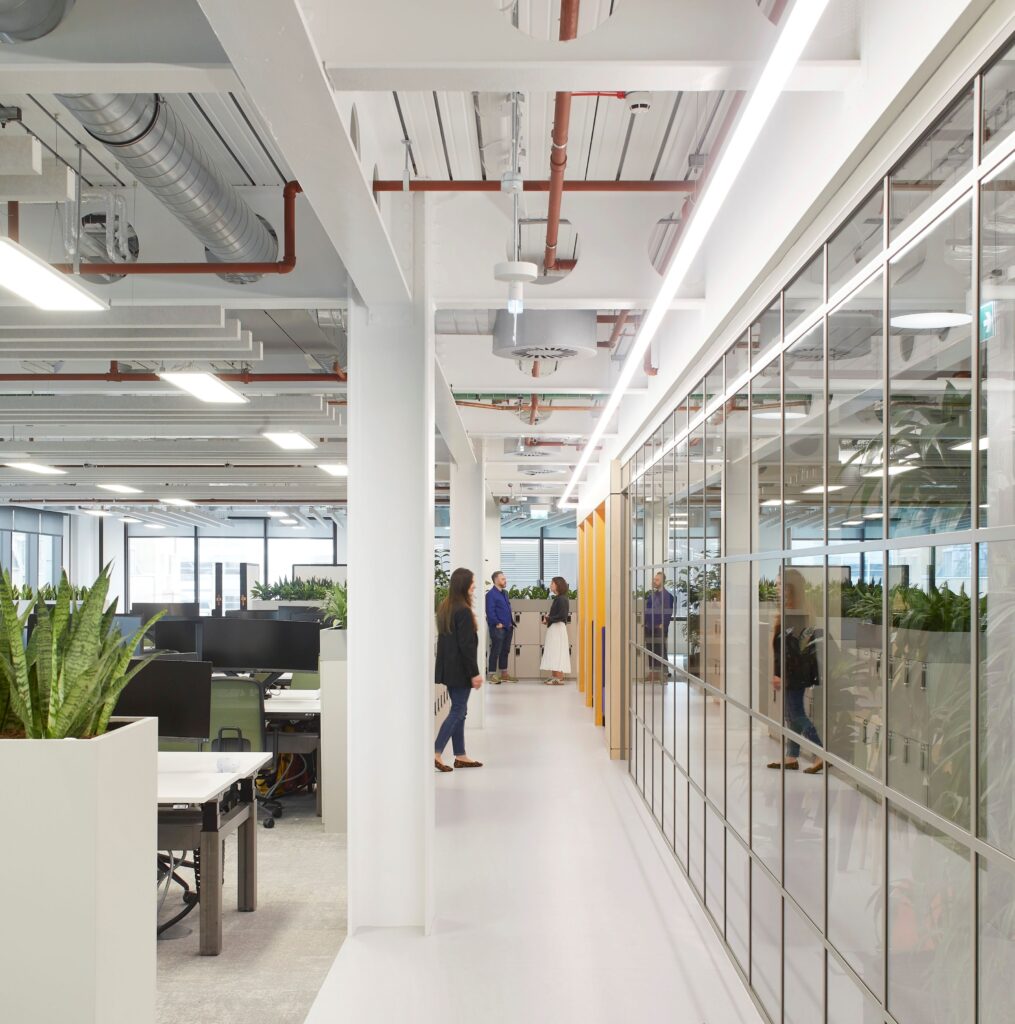
Glass has become a key material in this evolution. Its ability to create bright, open environments makes it particularly well suited to contemporary office design. Glass partitions and door systems help maximise natural light, improving mood and reducing reliance on artificial lighting.
They also support a sense of openness and connection across a workspace, which is increasingly important in flexible and collaborative office environments.
Designing workplaces for the future
Workplace design is continuing to evolve, with a growing emphasis on environments that support both physical and mental wellbeing. Alongside materials and air quality, we are also seeing an increase in the use of biophilic elements—introducing natural textures and greenery to create more balanced, human-centric spaces.
Ultimately, creating the right office atmosphere is about more than meeting standards. It’s about designing spaces where people feel comfortable, supported, and able to perform at their best.
By taking a holistic approach to workplace design, businesses can create environments that not only look good but also enhance wellbeing, engagement, and long-term productivity.
Recent insights
 Sustainability
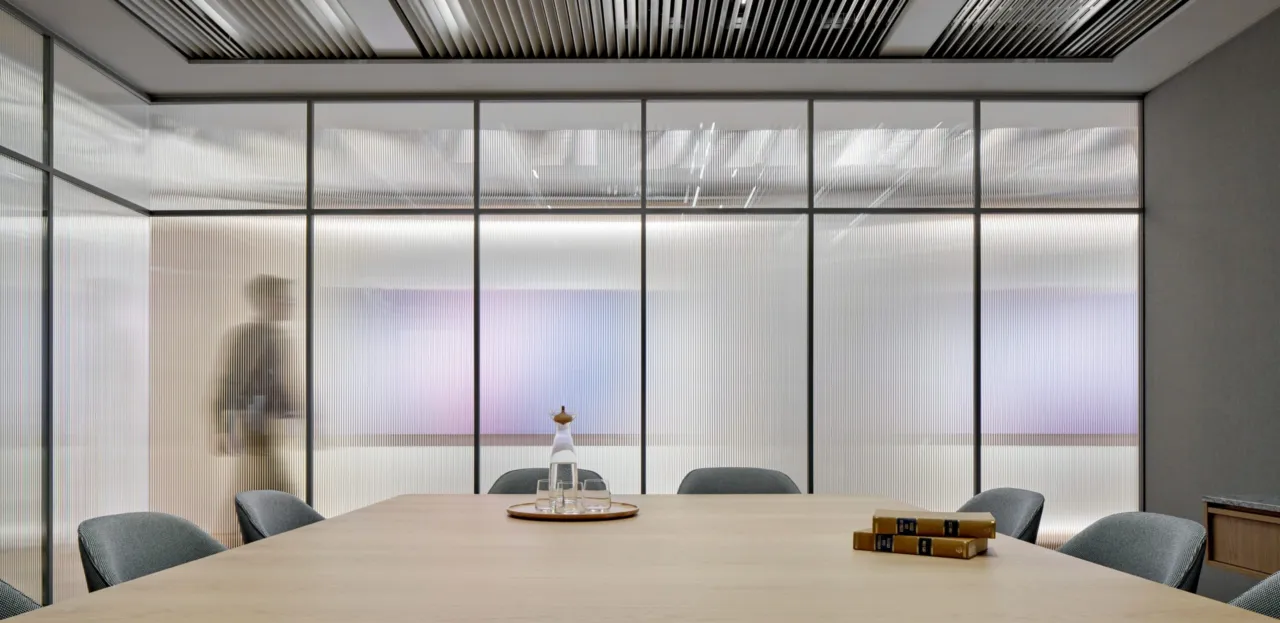
Optima contributes to industry debate and guidance on the reuse of glass partitioning
Optima is an active member of the Alliance for Sustainable Building Products (ASBP) and has contributed to the ASBP’s “The Reuse of Glass Partitioning Systems” guidance. We also took part in ASBP’s industry-wide webinar on the subject earlier this year.
View insight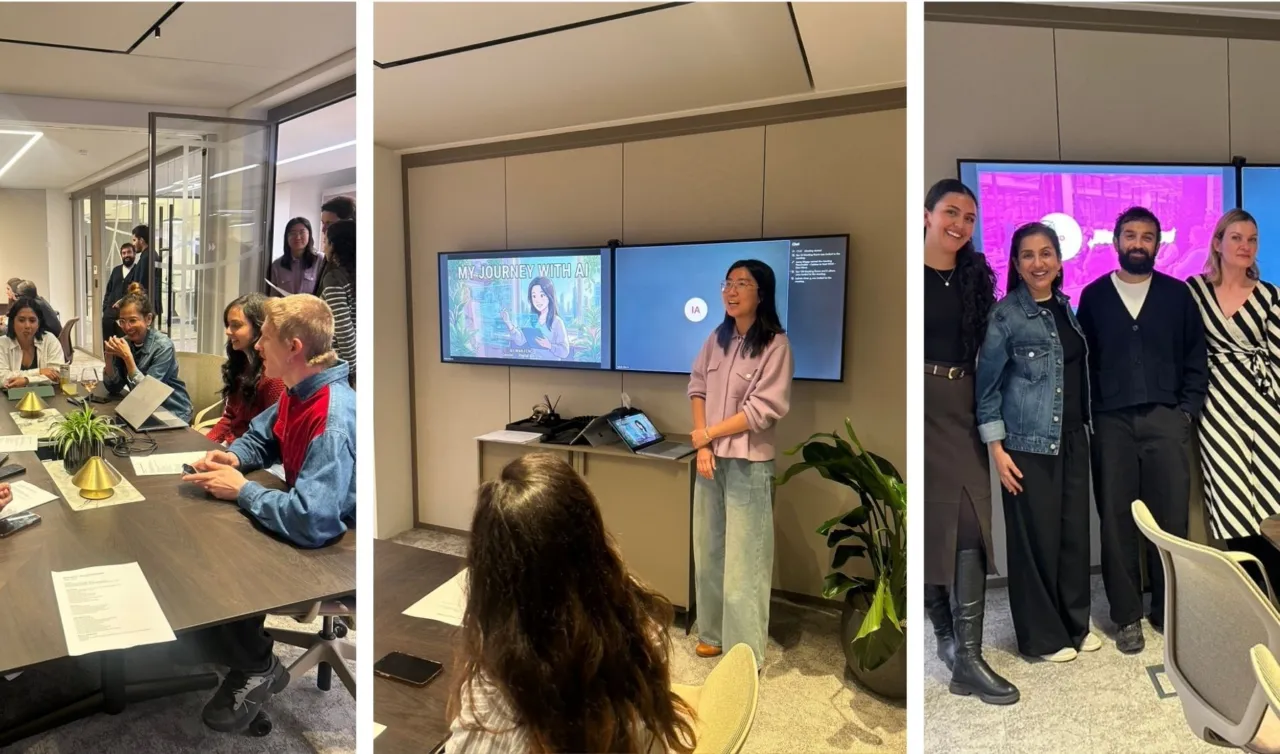 Trends
Is AI amplifying design thinking, or replacing it?
With AI impacting all aspects of work in the design community and construction industry, a question on everyone’s lips is what does this mean for me?
View insight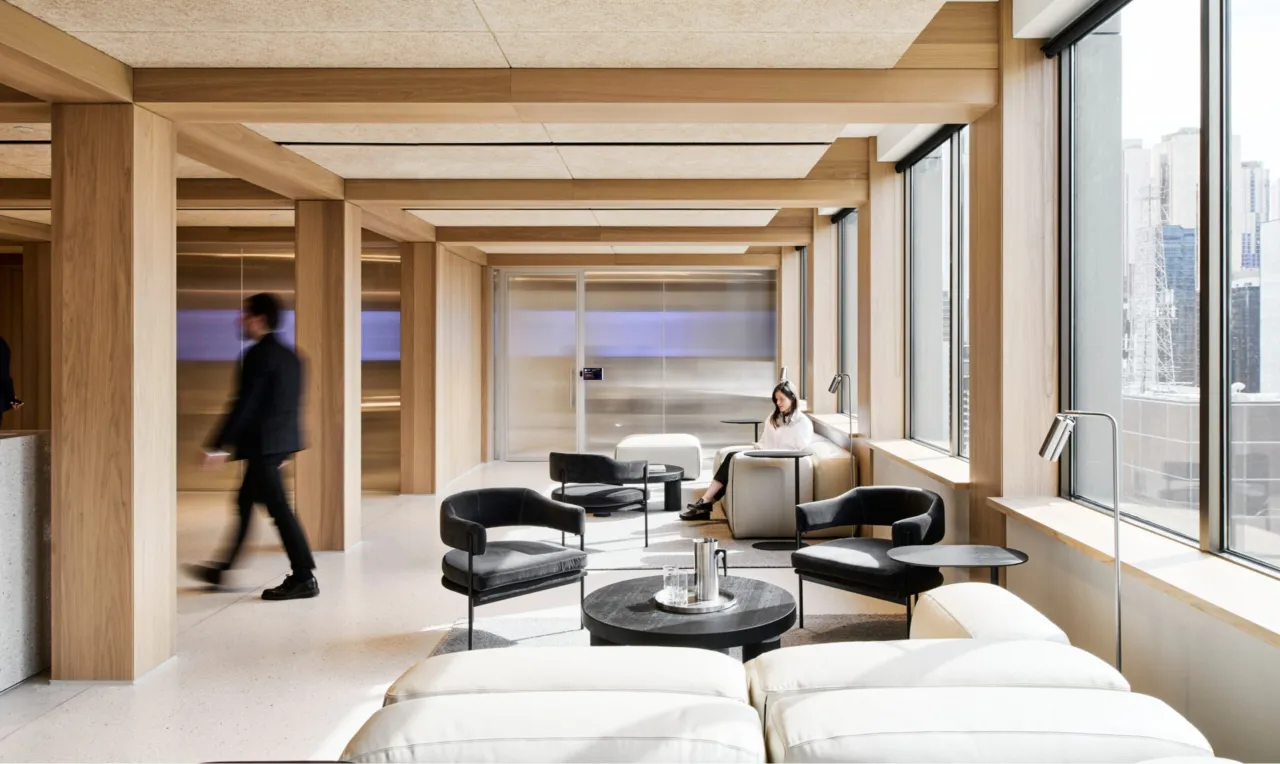 Blog
BlogBeyond Division 8 and 10: How Workplace Design Is Reshaping Collaboration
There is a noticeable shift happening in workplace design. The conversation has moved beyond desk ratios, occupancy density, and space efficiency toward something more human-centered. Increasingly, workplaces are being asked to justify presence rather than simply accommodate it.
View insight
Need help with your next project?
Talk to our team for practical advice on systems, performance and specification.
Enquire now
Sign up to the PurOptima newsletter
Stay up to date with the latest PurOptima innovations, project news and insights from across the global workplace design community